honest always 💕 this post contains affiliate links, which means i may earn a small commission if you shop through them, at no extra cost to you.
skincare
hyaluronic acid in fall, why it stops working when temperatures drop
the hyaluronic acid fall skincare problem, why your holy grail serum starts working against you once the air dries out
📦 free 2-day shipping on every pick below: both products in this post ship amazon prime, if you’re not a member yet, amazon prime offers a free trial with fast, free shipping, worth grabbing before you order anything from this list. start your free prime trial here.
the short version: here’s the hyaluronic acid fall skincare problem nobody warns you about, hyaluronic acid is a humectant, it works by pulling water toward your skin. when the air around you is humid, it pulls that water from the atmosphere. but once relative humidity drops, commonly cited around 40% and below, the kind of dry air that shows up the second heaters and cold fronts arrive, ha can’t find enough moisture in the air to pull from. so it starts pulling water from the deeper layers of your own skin instead, and that water evaporates right off the surface, leaving you drier than when you started.
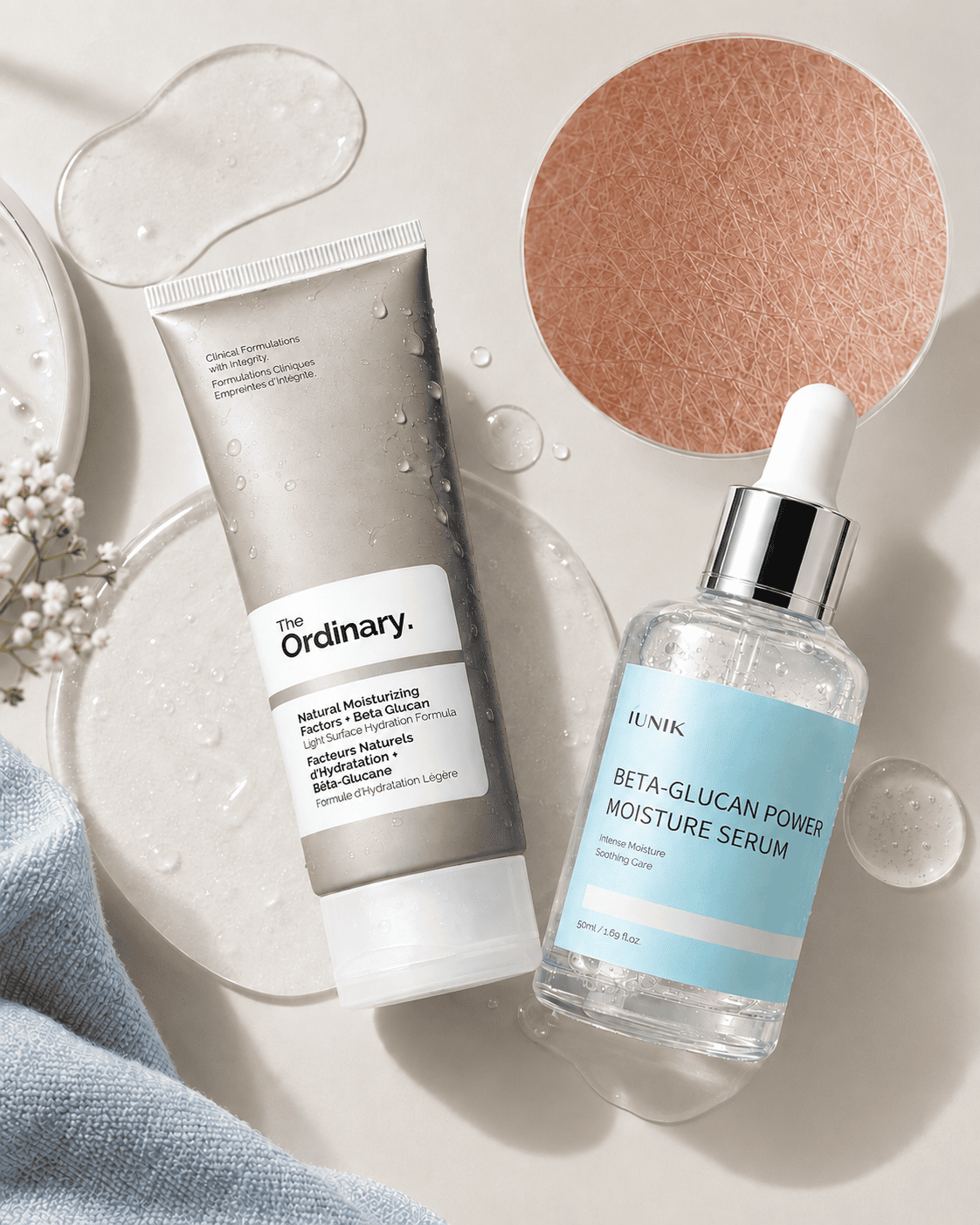
the korean humectant that behaves differently in dry air is beta-glucan, and below are the two picks under $20 that use it, plus why it doesn’t have the same reversal problem ha does.
quick compare
the two under-$20 picks, at a glance
| image | budget pick | matches | price |
|---|---|---|---|
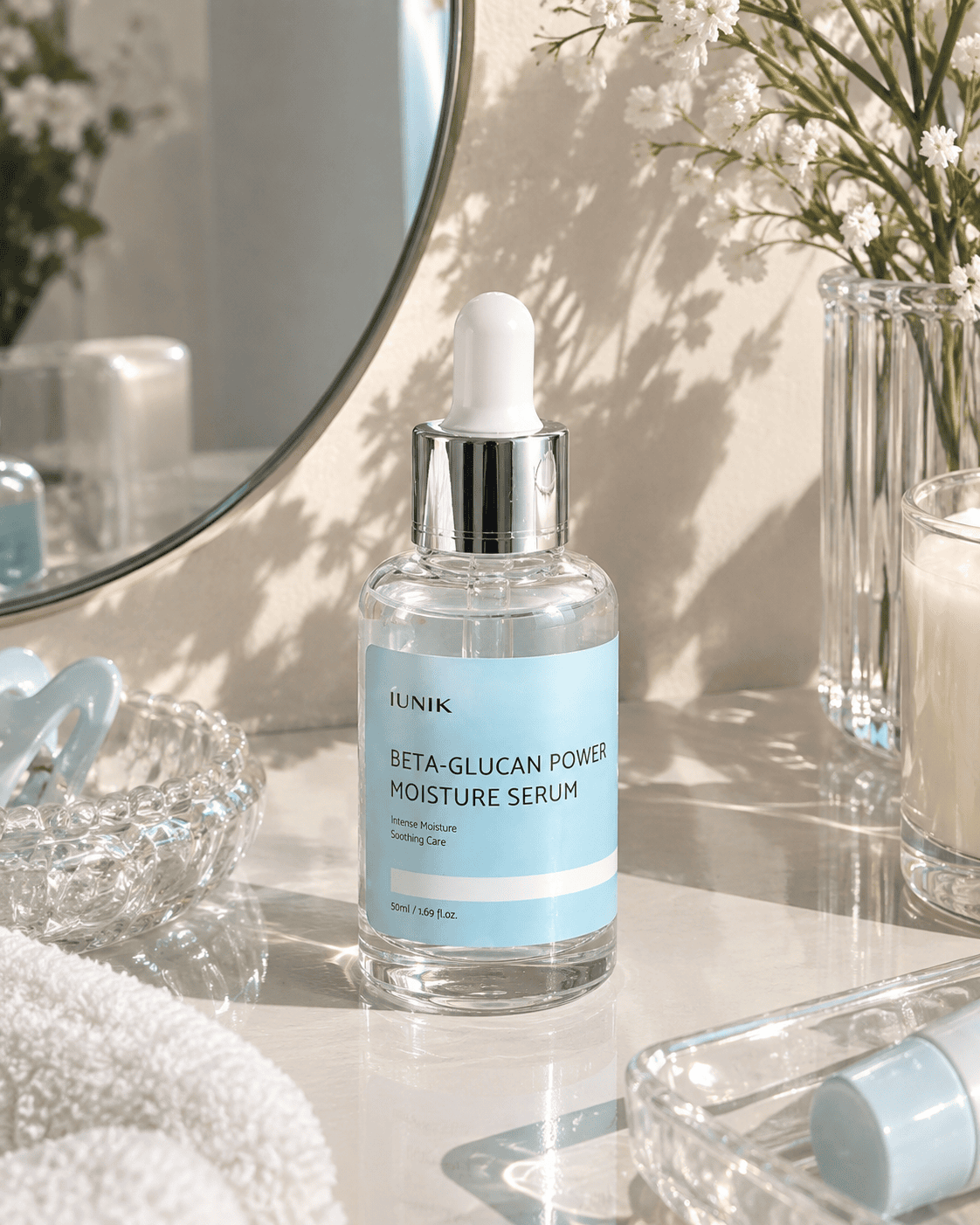 | iunik beta-glucan power moisture serum | premium beta-glucan serums often priced $80 to $150+ | $19.57 |
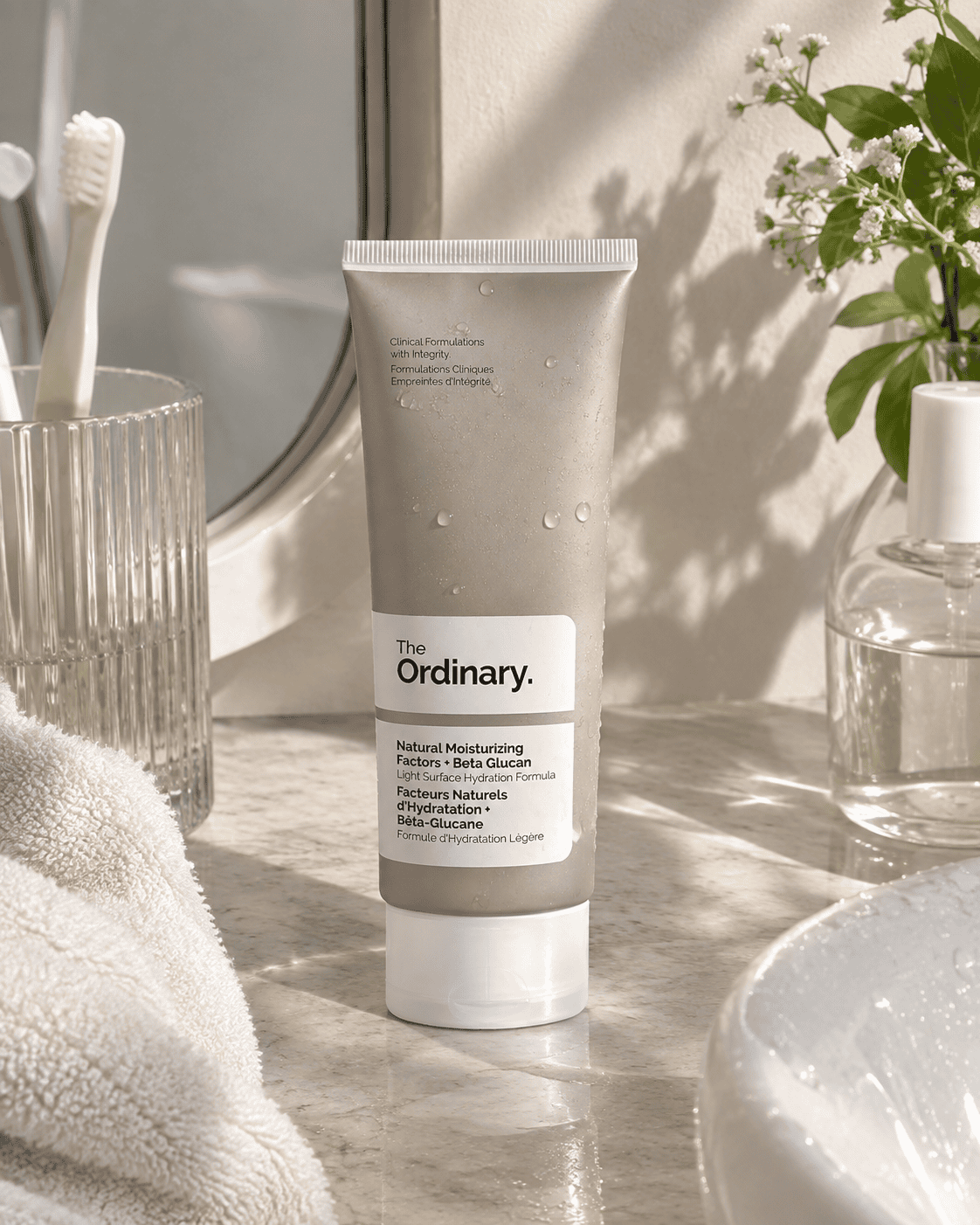 | the ordinary nmf + beta glucan | richer barrier-repair gel moisturizers in the $30 to $60 range | $12.15 |
one honest flag before you keep reading, iunik is a verified south korean brand, the ordinary is not, it’s canadian, made by deciem in toronto. it’s included here because the beta-glucan formula itself is genuinely relevant to this fall problem, not because it’s k-beauty, more on that in its card below.
the science bit
why hyaluronic acid reverses in dry air
hyaluronic acid can hold up to a thousand times its weight in water, which is exactly why it became skincare’s most hyped ingredient. but that superpower comes with a catch that most hyaluronic acid serum bottles never mention, ha doesn’t create moisture, it redistributes it. in a humid environment, it pulls water from the air into your skin. in a dry one, with nowhere else to pull from, it pulls water from the lower layers of your own skin up toward the surface, where it evaporates.
multiple dermatology sources describe this same mechanism, hyaluronic acid is a humectant, not a moisturizer in the occlusive sense, and it depends on ambient humidity or a sealing product to function as intended. when humidity is too low, roughly the range where indoor heating and cold, dry air show up each fall and winter, the reversal effect becomes a real risk rather than a rare edge case.
this is the actual hyaluronic acid fall skincare problem, it’s not that ha stops working, it’s that the exact mechanism that makes it so good in summer humidity can flip against you the moment the air dries out. you don’t need to throw out your ha serum, but fall is exactly when it needs backup.
the swap
the korean humectant that doesn’t reverse the same way
beta-glucan is a polysaccharide most commonly derived from oats or mushrooms, and it’s become one of k-beauty’s most talked-about hydration ingredients for a specific reason, lab measurements comparing the two at equal concentration have found beta-glucan retains roughly 20% more moisture than hyaluronic acid. it also works through a different mechanism, it’s less dependent on pulling ambient atmospheric moisture the way ha is, and it’s widely regarded in skincare as one of the gentler humectants available, which is part of why it shows up so often in products aimed at sensitive or reactive skin.
that combination, strong water-holding capacity plus a gentler, less humidity-dependent mechanism, is exactly why beta-glucan serum products have been climbing as a fall and winter alternative or companion to straight hyaluronic acid.
this week’s newsletter has the full fall routine
subscribers get the complete step-by-step routine built around both products below, delivered this week, sign up free before it lands in inboxes, otherwise it’ll post to threads tomorrow instead
deep-dive breakdown
the full product breakdown
iunik beta-glucan power moisture serum, 1.69 fl oz
amazon
10k+ bought last month
mature skin
sensitive skin
hyaluronic acid fall skincare problem
the luxury vs. budget formula match: iunik built this serum around a 98% pure beta-glucan concentration, a genuinely high number, most premium beta-glucan serums that charge $80 to $150 tend to formulate closer to 1 to 2% active concentration, filling the rest of the bottle with water, thickeners, and fragrance. a higher raw percentage of the active ingredient is expensive to source, which is a real part of why luxury brands often dilute it down and lean on packaging and fragrance instead. iunik skips the fragrance and the markup and puts the concentration where it actually does the work.
the texture is a genuinely gentle, slippery, almost water-like gel, not harsh or tingly, beta-glucan at this purity reads as soothing rather than active. with over 2,600 reviews holding a 4.4 star average and 10,000-plus bought in a single month, this has become one of the more repurchased fall staples in the affordable k-beauty hydration category specifically because it doesn’t have the reversal risk a straight hyaluronic acid serum carries in dry air.
dry, mature, or sensitive skin, anyone whose ha serum has started feeling tight or drying once the weather turned
seasonal dehydration, barrier support, reactive or easily irritated skin
skip if: you want a serum with active anti-aging ingredients layered in, this one is built purely for hydration and barrier support
the ordinary natural moisturizing factors + beta glucan, 3.4 fl oz
amazon’s choice
6k+ bought last month
gel-cream
budget pick
hyaluronic acid fall skincare problem
a quick honesty note: this pick isn’t korean, it’s from the ordinary, a canadian brand under deciem, based in toronto. it’s included here because it’s one of the most affordable, widely available beta-glucan moisturizers on amazon, and it genuinely fits this post’s fall-humidity problem, but it isn’t a k-beauty pick, and it’s labeled that way on purpose rather than folded in as if it were.
the luxury vs. budget formula match: this gel-cream combines beta-glucan with the ordinary’s natural moisturizing factors complex, amino acids, fatty acids, and other components meant to mimic what skin already produces on its own to hold moisture, layered over a lightweight gel-cream base. it’s a step up from a straight beta-glucan serum in richness, closer to what a $30 to $60 barrier-repair gel moisturizer from a mid-tier brand offers, at under $13 for a full 3.4oz bottle. with over 3,100 reviews and a 4.6 star average, plus amazon’s choice status, it’s a genuinely well-reviewed layer to add on top of the iunik serum above, or to use on its own on milder dry days.
all skin types, anyone who wants a richer, gel-cream texture on top of a serum rather than a pure serum alone
all-day hydration, layering over an active-treatment routine, budget barrier support
skip if: you specifically want a 100% korean routine, pair the iunik serum with a korean cream instead
how to use it
how to actually use beta-glucan this fall
| tip | why it matters |
|---|---|
| a little goes a long way | because it’s a concentrated gel-cream hybrid, using too much at once can cause it to pill into little flakes on the skin, start with a dime-sized amount for your whole face |
| apply to slightly damp skin | like any humectant, beta-glucan performs best when applied to skin that isn’t bone-dry, mist or pat on a little water first if your skin feels tight |
| don’t layer under another gel | if you’re also using a gel-based treatment, like a gel acne treatment, apply this after that product has fully dried down to avoid texture clashing and pilling |
| seal it in | any humectant, beta-glucan included, works best when followed by something occlusive, even a light layer of moisturizer or facial oil, to actually lock the moisture in rather than letting it evaporate |
is fall dryness turning into pigmentation or dark spots?
the pigmentation fix guide covers exactly this fall trend angle in more detail, the first 5 downloads are completely free
questions
hyaluronic acid fall skincare problem, frequently asked questions
q. why does hyaluronic acid dry out my skin in fall?
hyaluronic acid is a humectant, it pulls water toward your skin from whatever source is available. in humid air it pulls from the atmosphere, but once humidity drops, commonly cited around 40% and below, there isn’t enough moisture in the air for it to pull from, so it can start pulling water from the deeper layers of your own skin instead.
q. what is beta glucan and how is it different from hyaluronic acid?
beta glucan is a polysaccharide, commonly derived from oats or mushrooms, that holds roughly 20% more moisture than hyaluronic acid at the same concentration, and it’s less dependent on pulling moisture from the surrounding air, which makes it more stable in dry, low-humidity conditions.
q. should i stop using hyaluronic acid in fall?
not necessarily, apply it to damp skin and always follow with a moisturizer to seal the moisture in, that alone prevents most of the reversal risk, adding a beta-glucan product is an extra layer of insurance rather than a strict replacement.
q. is the ordinary a korean skincare brand?
no, the ordinary is canadian, made by deciem in toronto. it’s included in this post as an affordable beta-glucan option, not as a k-beauty pick, iunik is the verified korean brand in this lineup.
q. can i use hyaluronic acid and beta glucan together?
yes, they’re commonly layered, apply the thinner, more watery product first, then follow with the richer one, and seal both in with a moisturizer, they target the same general goal through slightly different mechanisms rather than competing with each other.
- iunik and the ordinary, official product and ingredient listings
- dermatology times, cosmeceutical myths column, hyaluronic acid and ambient humidity