honest always 💕 this post contains affiliate links (#ad #affiliate), which means i may earn a small commission if you shop through them, at no extra cost to you. every brand below is verified korean before it makes the list.
skincare
spf in korean skincare, why it’s different from western sunscreen
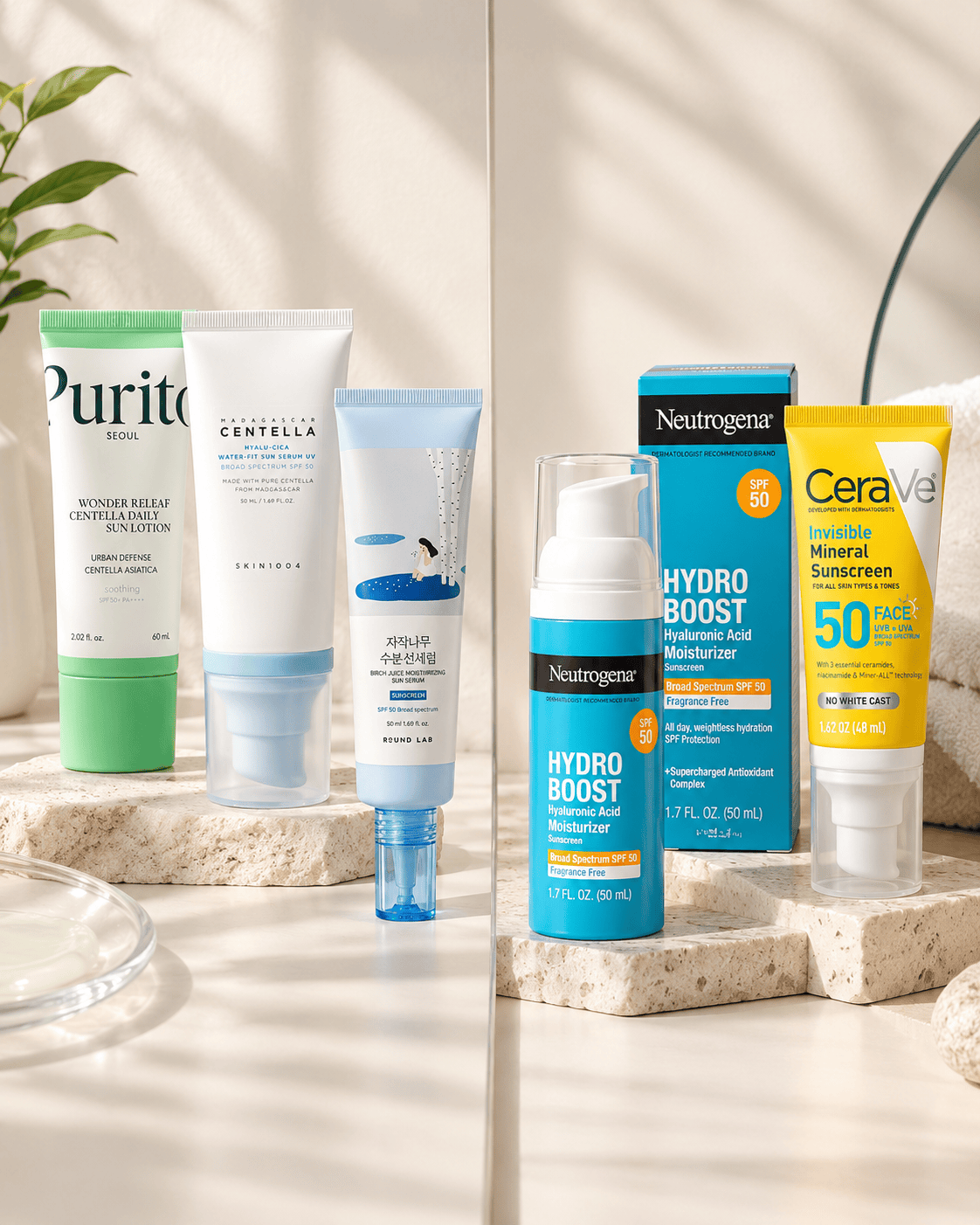
korean sunscreen vs western spf, side by side texture and finish
the short version: the korean sunscreen vs western spf debate isn’t about spf number at all, it’s about which uv filters your country’s regulator lets a brand use. korea and the eu approve a newer generation of filters that the us largely didn’t, for decades, which is the actual reason k-beauty sunscreen feels like a skincare step instead of a chalky chore. once you know that one regulatory gap, the whole “why does korean sunscreen feel so different” question stops being a mystery.
below, the filter difference explained plainly, a real korean sunscreen vs western spf comparison, and three korean picks matched to oily, dry, and sensitive or acne-prone skin.
for your specific skin problem: this post covers spf by skin type, but if you want a full plan built around your exact concern, grab the free starter guide below, it’s free, no catch.
the regulation bit
the uv filter difference that explains everything
every sunscreen, korean or western, works by using active ingredients called uv filters to block or absorb uv rays before they reach living skin cells. the difference in the korean sunscreen vs western spf conversation comes down to which filters each country’s regulator actually allows. in the us, the fda hadn’t approved a new sunscreen active ingredient since 1999, for over two decades, while korea, the eu, japan, and australia kept approving newer, more advanced filters the whole time. that gap only started closing in june 2026, when the fda finally approved bemotrizinol, better known as tinosorb s, an ingredient korean and european sunscreens have used for years.
korean sunscreens are built around next-generation organic filters like tinosorb s, tinosorb m, uvinul a plus, and mexoryl xl, filters chosen for being more photostable and more broadly protective against both uva and uvb rays than the older filter combinations us drugstore spf has relied on for years.
this filter access is also why korean chemical sunscreen tends to sit clear and weightless instead of greasy, and why korean mineral sunscreen has gotten so much better at avoiding the white cast that zinc oxide and titanium dioxide used to leave behind. broader uva coverage matters too, uva rays are the ones responsible for most premature skin aging, so a sunscreen that actually blocks the full uv rays spectrum, not just the burn-causing uvb portion, is doing more long-term work for your skin.
side by side
korean sunscreen vs western spf, side by side
built on newer filters like tinosorb s and uvinul a plus, broader uva coverage, lighter texture, minimal to no white cast, formulated to double as a skincare step with actives like centella or hyaluronic acid mixed in
built on an older, smaller filter list, still effective at the spf number on the label, but often thicker, more likely to leave a cast if mineral, and marketed as a standalone protective step rather than part of your routine
none of this means western spf doesn’t work, spf 50 blocks roughly the same percentage of uvb rays regardless of which filters built it. the real difference in the korean sunscreen vs western spf comparison is texture, uva breadth, and how much a sunscreen feels like something you’d actually want to reapply.
worried about sun damage turning into dark spots?
the pigmentation fix walks through spf’s role in preventing pigmentation before it starts, plus how to treat marks that are already there
the lineup
korean sunscreen picks by skin type
a korean sunscreen vs western spf comparison only means something once you’ve actually got the right formula for your skin. these three are matched by skin type, all 100% korean brands, all spf 50, and all thoroughly worth the extra few dollars over a drugstore tube.
skin1004 madagascar centella hyalu-cica water-fit sun serum, spf 50
amazon
30k+ bought last month
combination skin
no white cast
centella sunscreen
spf 50
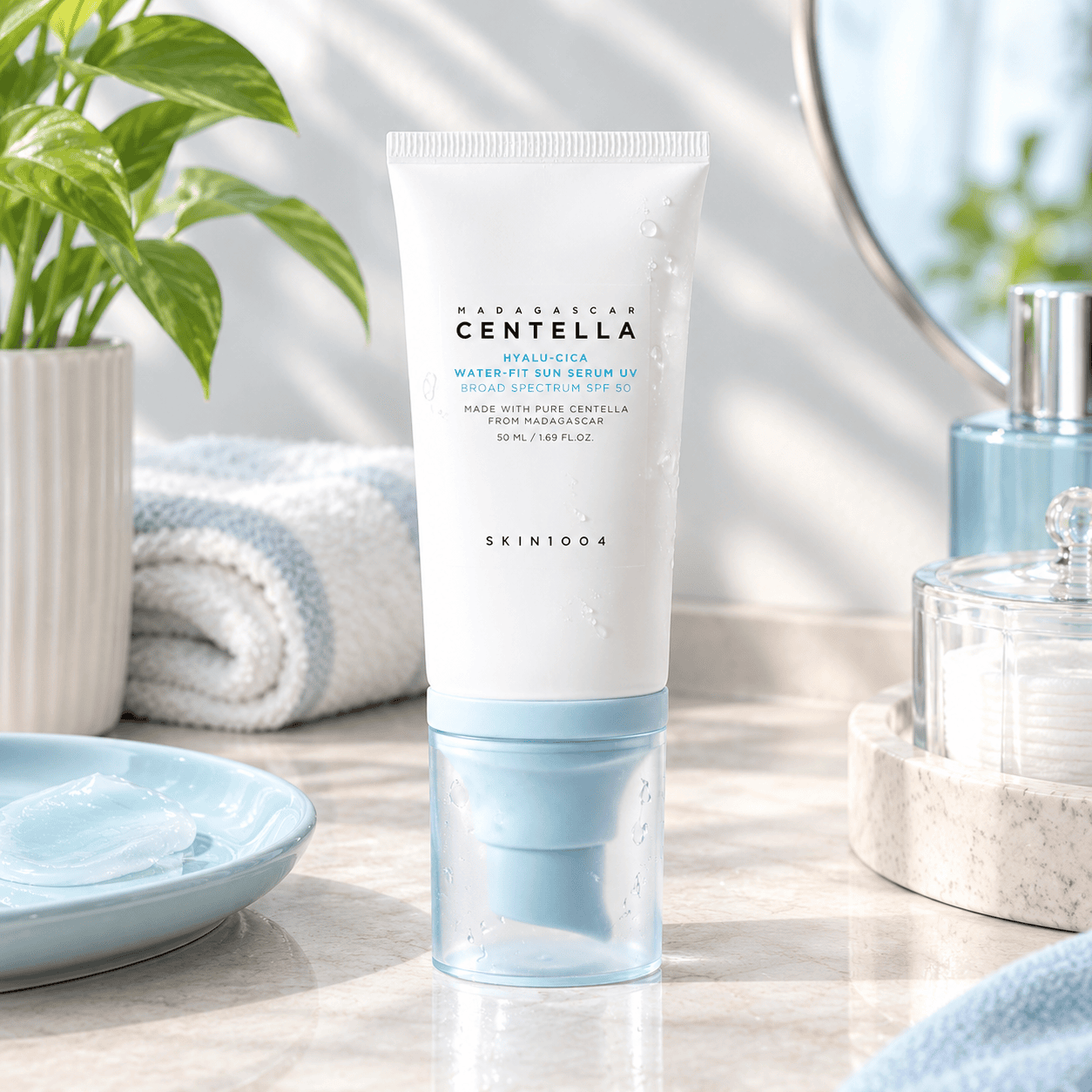
skin1004 built its entire reputation on centella asiatica from madagascar, and this centella sunscreen is where that ingredient focus actually pays off for oily and combination skin. it’s formulated as a serum rather than a cream, which matters more than it sounds like it should, cream-based sunscreens sit as a film on top of oil-prone skin and start looking shiny by mid-morning, while a serum texture absorbs into the skin the way your other actives do, then sets to a soft matte-satin finish that photographs clean under flash and doesn’t pill under powder.
the water-fit formula uses a lightweight aqueous base carrying tinosorb-family filters, so it’s doing genuine broad-spectrum uva and uvb work while staying completely clear, no chalky cast on any skin tone, no gray tint in photos, nothing to blend out. centella asiatica is doing double duty here too, it’s calming inflammation and redness at the same time the filters are blocking uv rays, which is the exact “sunscreen as skincare” idea the korean sunscreen vs western spf conversation keeps coming back to. hyaluronic acid is folded in specifically so the fast-absorbing, oil-control-friendly texture doesn’t tip over into stripping, you still get a hydration layer, it just doesn’t sit heavy. with over 2,000 reviews holding a 4.4 star average and 30,000-plus bought in a single month, this has become one of the most repurchased daily sunscreens in the entire skin1004 lineup, and once you’ve worn a serum-texture spf through a full oily-skin summer, a thick western cream sunscreen is a genuinely hard sell to go back to.
noticeably lighter and less greasy at the same spf 50 level, zero white cast, sits better under makeup and powder
oily and combination skin, anyone who wants their daily sunscreen to double as a calming, skin-soothing step
skip if: your skin runs dry, the water-fit texture is built for oil control and won’t feel like enough moisture on its own
round lab birch juice moisturizing sun serum, spf 50
amazon
3k+ bought last month
dehydrated skin
fragrance-free
round lab sunscreen
spf 50
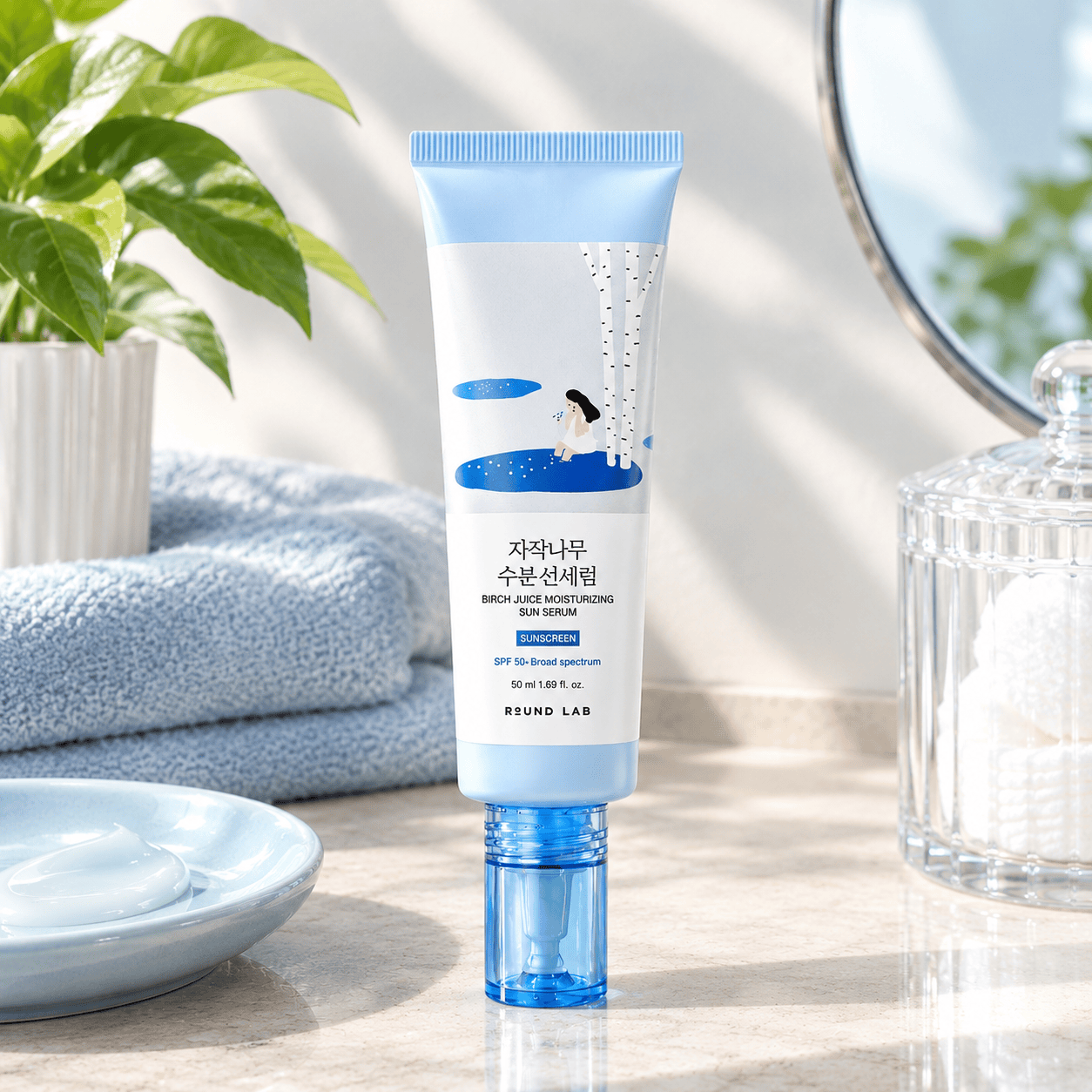
round lab sunscreen is built around fermented birch sap, the ingredient the entire birch juice line is named for, and it’s the reason this specific formula reads so differently on dry skin compared to most spf. birch sap is naturally rich in amino acids and minerals that support the skin barrier, so instead of adding a protective film on top of already-compromised, flaky skin the way a lot of western spf does, this round lab birch juice sunscreen is actively feeding moisture back in while it protects. the texture is genuinely airy for something this hydrating, it spreads in a thin, almost gel-like layer that sinks in within a minute or two rather than sitting on the surface waiting to be absorbed.
pdrn, short for polydeoxyribonucleotide, is layered in alongside hyaluronic acid, both are humectant and skin-repair ingredients that keep pulling and holding moisture in the skin barrier throughout the day, which is exactly what dry skin needs from a daily sunscreen that’s otherwise easy to skip because it feels tight or drying. it’s also fully fragrance-free, no added scent to irritate a barrier that’s already compromised from dryness. the biggest practical win reviewers keep flagging is that it doesn’t pill under moisturizer or makeup, a common complaint with drier, more mineral-heavy sunscreen formulas that ball up the second you press a foundation sponge into them. at nearly 2,800 reviews and a steady 4.4 star average, it’s held up as one of the more dependable everyday picks specifically for people whose skin gets tight, flaky, or uncomfortable under regular western spf.
adds real hydration instead of just sitting on top, no pilling under moisturizer, completely fragrance-free
dry and dehydrated skin, anyone whose usual spf leaves their face feeling tight or flaky by midday
skip if: you’re oily and layer heavy makeup on top, a lighter serum-first formula like the skin1004 pick above suits that combination better
purito seoul wonder releaf centella daily sun lotion, spf 50
yesstyle
20% off, in stock
acne-prone skin
low irritant
centella sunscreen
spf 50
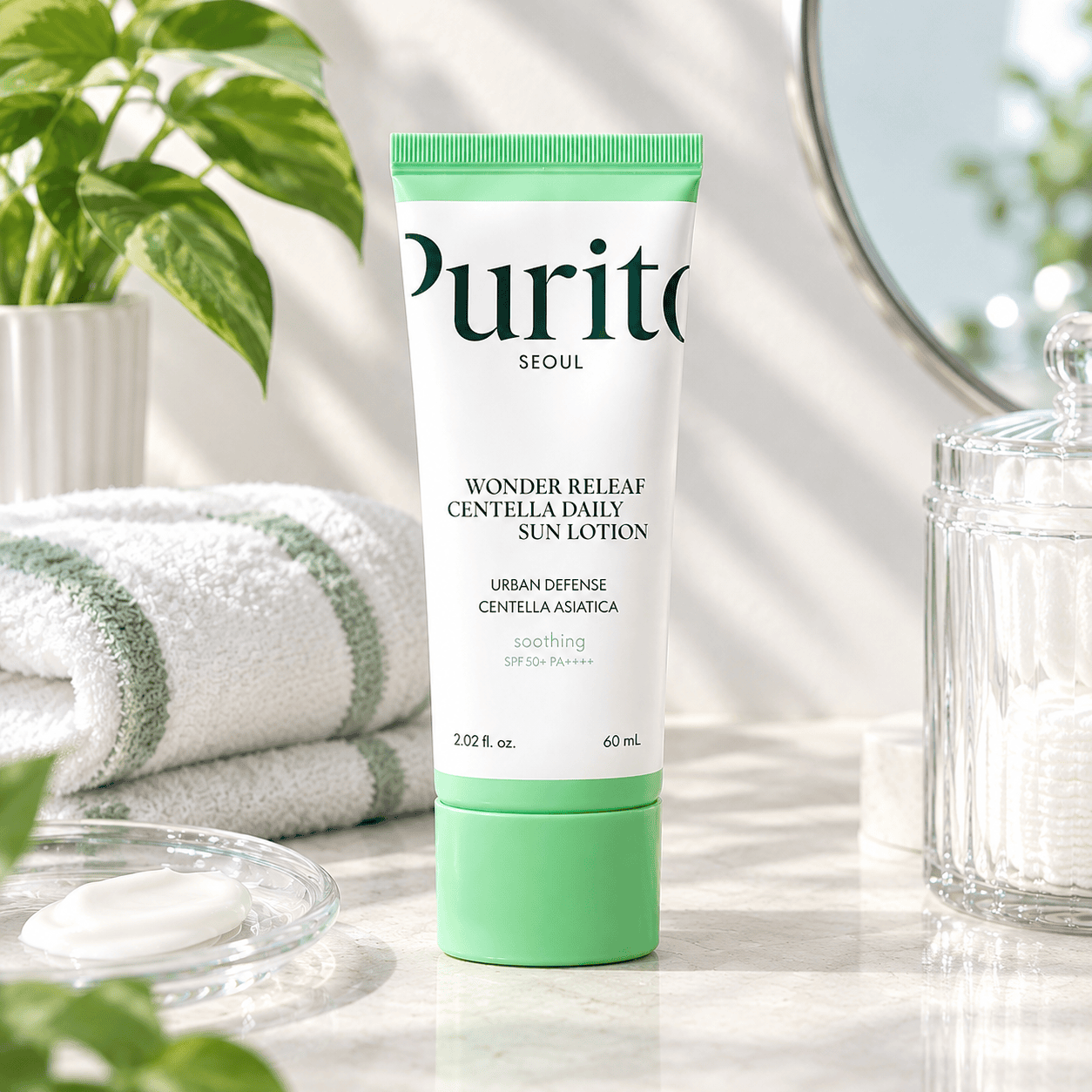
purito seoul built its whole brand identity around minimal, low-irritant formulas, and wonder releaf is where that philosophy shows up most clearly in a sunscreen. the ingredient list is deliberately short and centella-forward, with no added fragrance, no drying alcohol, and none of the extra “nice to have” additives that tend to be the actual cause of stinging or breakouts when sensitive or acne-prone skin reacts to a new spf. that short ingredient list is the real selling point, when something goes wrong on reactive skin it’s almost always one of the extras, not the core uv filters, so cutting the extras down is a legitimately smart formulation choice, not just a marketing angle.
the lotion texture itself is thin and fast-absorbing without feeling watery, it sinks into the skin in one pass and doesn’t leave the greasy film that can trap sebum and worsen breakouts on acne-prone skin. centella asiatica is once again doing the calming work here, its redness-soothing reputation makes this an easy layer over freshly treated, actively-medicated, or barrier-compromised skin without adding a fresh source of irritation on top of whatever you’re already managing. it’s a smaller 60ml bottle, so it doesn’t stretch quite as far as the two amazon picks above per use, but for sensitive and reactive skin specifically, this is consistently the formula that gets recommended once heavier or more fragranced spf has already caused a problem, and at just over seventeen dollars on sale it’s still the most budget-friendly pick in this whole lineup.
shorter, lower-irritant ingredient list, no added fragrance, far less likely to sting or trigger breakouts
sensitive, reactive, or acne-prone skin, anyone layering spf over actives or a healing skin barrier
skip if: you want a heavier, more occlusive cream finish, this leans lightweight and fluid rather than rich
a quick habit note, korean spf is often lighter, but it’s still spf, it still needs a proper cleanse at night. a quick water-based cleanser can leave filter residue behind, an oil cleanser first gets it all the way off before your pm routine starts.
questions
korean sunscreen vs western spf, frequently asked questions
q. is korean sunscreen chemical or mineral?
both exist. korean chemical sunscreen is far more common and tends to be the lighter, no-cast option, while korean mineral sunscreen has also improved significantly and now comes in tinted or micronized versions that avoid the heavy white cast older mineral formulas were known for.
q. why does korean sunscreen feel so different from western spf?
it comes down to which uv filters each country’s regulator approves. korea has long allowed newer, more photostable filters like tinosorb s and uvinul a plus, which formulate into lighter, less greasy textures than the older filter list the us relied on for decades.
q. does korean sunscreen block uv rays as well as western spf?
at the same spf and pa rating, yes. spf measures uvb protection and pa measures uva protection, so a korean sunscreen at spf 50 pa++++ and a western spf 50 broad-spectrum sunscreen are both doing their job, the korean version just tends to do it in a lighter, more cosmetically elegant formula.
q. what does a centella sunscreen actually do?
centella asiatica is a calming plant extract, so a centella sunscreen combines uv protection with redness-soothing benefits, which is why it’s such a common pairing in korean sun serums for sensitive, oily, or post-active skin.
q. is the korean version of a sunscreen the same as the us amazon version?
not always. some korean brands reformulate their us-market products to comply with fda-approved filters, so the active ingredients can differ from the korean-market version, always check the active ingredients list on your specific bottle if this matters to you.
want spf picked for your exact skin problem?
grab your free amsib♡ gift, a starter guide to shopping k-beauty sunscreen and skincare without wasting money on the wrong formula. it’s free, no catch.